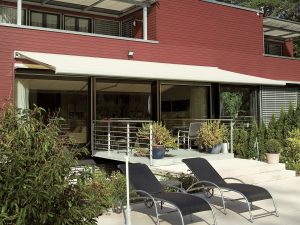
Most smart home blinds compromise on looks: visible motors, thick tracks, obvious wiring…
Blindspace boxes solve this by hiding everything in your walls or ceiling, while Umbra Shading provides reliable blinds and tracks that move silently. With concealed blind systems, you can get the full smart home experience without sacrificing your carefully created home aesthetic.
Why bother with smart blinds?
Look, you don’t need smart blinds. But once you have them, you’ll wonder how you lived without them.
Let’s talk about the obvious things first: you can close your bedroom blinds without getting out of bed or open the living room blinds while you’re still upstairs getting dressed.
The other benefits show up over time. Your house uses less energy because the blinds automatically block afternoon sun in summer and let in warming light in winter. Your furniture doesn’t fade because UV protection happens whether you remember it or not. And when you’re on holiday, your house looks lived-in because the blinds still open and close on schedule.
The problem with many smart blind systems is that they can be clunky, visible, and don’t always integrate well with modern home design. Blindspace and Umbra Shading do things differently.
The Blindspace difference
Blindspace has solved one of the biggest challenges in smart home design: keeping the technology hidden. These Swedish-engineered concealment systems work with most major home automation platforms, including Alexa, Somfy, Google Home, and Control 4.
These boxes for concealing blinds are flexible, so you can choose your favourite smart blinds manufacturer. They can house ultra-quiet motors from leading manufacturers like Somfy and Lutron, ensuring your blinds operate almost silently. Their soft start and stop features means your blinds move smoothly and quietly within their concealed housing. When integrated properly, you’ll barely notice your blinds are moving; you’ll just see the changing light levels in your room.
Umbra Shading
We love the blinds and tracks created by Umbra. They’re a perfect match for Blindspace boxes, and Umbra has thought through the details that other manufacturers miss.
For instance, their Flow curtain tracks can be powered from mains electricity or batteries. The battery option is great if you’re retrofitting, because you don’t need to tear up your walls to run new cables. Both work with phone apps and voice control.
And here’s the best part: if you start pulling the curtains by hand, the motor kicks in and finishes the job. So when your phone’s dead or a friend is visiting and doesn’t know the voice command, just give them a tug and let the system take over. Most motorised systems are at risk of breaking if you try this, but Flow tracks are built for it.
Umbra Shading’s Evolve roller blind system works the same way; originally designed for electric operation but perfectly happy being operated manually when needed. Overall, we find Umbra’s products are smart enough to be helpful, but not so smart they become annoying.
Creating the perfect smart bedroom
Let’s look at a practical example. You want your bedroom completely dark for proper sleep, but you don’t want all the visible hardware.
Begin with Umbra’s KuroLok system. Their zipped-edge blackout blinds prevent any light from sneaking through the sides. The whole thing (headbox, channels, bottom hembar) gets concealed in Blindspace boxes that are painted to match the colour of your walls or ceiling. Now add smart controls and program your blackout blinds to:
- Close automatically at sunset to maintain privacy and begin your wind-down routine
- Open gradually in the morning so you can wake up with the sun instead of jarring alarms
- Respond to voice commands when you’re too comfortable to get up
- Coordinate with any of your other smart home devices Scheduling that adapts to real life
One of the best features of smart homes is their scheduling capabilities. When your concealed blinds are connected to your home automation system, you can: - Set seasonal schedules that adjust automatically as sunrise and sunset times change throughout the year. No more manually updating timers every few months.
- Create room-specific programs where living room blinds open to welcome morning light, while bedroom blinds stay closed for weekend sleep-ins.
- Link to weather data so blinds automatically adjust based on cloud cover and temperature.
- Coordinate with other smart home devices. Imagine your blinds opening as your smart coffee maker begins brewing and your thermostat adjusts for the day.
The retrofit reality
Blindspace boxes work best when installed during construction. But not everyone has the luxury of building their house from scratch, so Blindspace boxes can also be retrofitted into existing homes.
Umbra’s battery powered options mean you don’t need an electrician to run new wiring. The concealment boxes can be surface-mounted if recessing isn’t possible. You might not achieve that perfectly seamless look of a new build, but you’ll still get all the same functionality and a much cleaner appearance than traditional blinds with visible motors and tracks.
Room by room
Lounges and other large living areas: Umbra’s Flow system with Blindspace boxes can handle heavy curtains across wide windows. Perfect for those floor-to-ceiling glass walls that look amazing but are difficult to cover.
Bedrooms: KuroLok blackout system with Blindspace concealment allows for complete darkness with zero hardware visible. It’s a game changer for shift workers or anyone sensitive to light.
Bathrooms and kitchen: ExtraLok handles moisture without breaking down. Important when you need window coverings, but you don’t want to manually operate them with wet hands.
Home offices: Any of the motorised blind options provide precise glare control throughout the day without getting up from your desk or interrupting video calls.
The investment perspective
Yes, this integrated approach costs more upfront than standard blinds. But consider the long term benefits:
- 12-year warranties on many Umbra systems mean your investment is protected
- You can save on your energy bills with optimised heat and light management
- Integrated smart home features can increase the value of your property
- Concealed blinds are protected when stored in their boxes, so there’s less wear and tear
Making it work in your home
The key to success with any smart home integration is planning. Start by thinking about how you use your windows throughout the day. Which rooms need blackout capabilities? Which windows are difficult to reach manually? Where would voice control be the most useful?
Then consider your existing smart home system. If you’re using Alexa or Google Home, choose motors and controls that are compatible. If you have a more sophisticated system like Control 4, take advantage of the advanced scheduling and scene capabilities.
Concealed blinds, Umbra systems, and Blindspace boxes show you can have all the smart features without the visual mess. Thinking this might work for your home? We’d be happy to talk through your specific situation. Every house is different, and there’s usually a solution that fits your budget and timeline.
Book a free consultation or visit our Solihull showroom to see these systems in action.