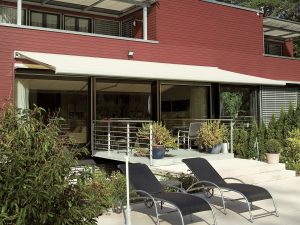
In recent years, we’ve all felt the impact of rising temperatures. Remember the summer of 2022, when the UK recorded temperatures above 40°C for the first time ever? Or perhaps you’ve noticed your bedroom becoming uncomfortably warm during summer nights? You’re not alone. In 2021, a staggering 4.6 million bedrooms in the UK overheated beyond healthy temperature thresholds.
Climate change already affects our daily lives. Finding effective ways to keep our homes comfortable while minimising our energy consumption has never been more important. This March 21st marks Global Shading Day, an annual event highlighting the critical role solar shading plays in fighting climate change. Smart solar shading solutions can dramatically improve our comfort, wellbeing and energy efficiency while reducing our environmental impact.
What is solar shading?
Solar shading refers to techniques and devices that control the amount of sunlight entering a building. You can use these systems to reduce glare and prevent heat gain in homes and workplaces, as well as improve the overall energy efficiency of your building.
Solar shading systems fall into two main categories:
Internal solar shading devices
- Fitted inside your home on your windows
- Examples include roller blinds, roman blinds, and interior shutters
External solar shading devices
- Fitted to the outside of your home
- Examples include external venetian blinds, external shutters, and awnings
Most solar shading devices can be operated manually by hand, or automatically with remote controls. Some advanced electric versions can even respond automatically to weather conditions, thanks to built-in sensors that integrate with smart home systems.
Why does solar shading matter?
According to the Intergovernmental Panel on Climate Change, the average number of days Europe will require air conditioning is excepted to increase by around 30% between now and 2050. Demand for energy will rise, and so will greenhouse gas emissions associated with keeping our homes cool.
Yet surprisingly, less than 50% of buildings in the EU currently have solar shading devices installed. This is a huge missed opportunity for creating more comfortable, future-proofed, energy efficient homes.
What are the benefits of solar shading?
Creates climate-resilient buildings
As we face more extreme weather patterns, homes need to adapt. With solar shading, your building can withstand temperature fluctuations without relying heavily on mechanical cooling systems. By blocking heat before it even enters your home, shading systems help maintain comfortable indoor temperatures naturally – even during heatwaves.
Reduces your need for air-conditioning
Air conditioning is effective but comes with high energy costs and environmental impact. Solar shading can dramatically reduce your need for air conditioning by preventing heat buildup in the first place. This “prevention rather than cure” approach means your home can stay cooler naturally, reducing your need to switch on those energy-hungry cooling systems.
Provides passive cooling that consumes no energy
Solar shading requires no electricity to perform its primary function. Once installed, blinds, shutters and awnings passively block sunlight and heat, making them an environmentally friendly solution for temperature control. Even motorised options use minimal energy compared to cooling systems.
Improves wellbeing
Proper solar shading doesn’t just make your home more comfortable, it also helps regulate natural light levels. This means reduced glare on screens and better visibility for everyday tasks. Good shading systems allow you to enjoy natural daylight without the uncomfortable heat or eye strain that come with direct sunlight.
The potential impact of solar shading is impressive. If we all had solar shading devices installed on our homes, we could reduce the amount of energy used for cooling by up to 60% by 2050. We could also avoid greenhouse gas emissions and potentially lower pollution levels by up to 58%.
Is your home at risk of overheating?
Your home is more likely to overheat if:
- You live in a flat on the top floor of a building
- The windows that can be opened in your property are all positioned on one side of the building – limiting ventilation and through-breezes
- You have large windows facing east, west or south
If any of the above applies to you, you might want to look at long-lasting solar shading options for your home.
How to save energy with solar shading
Winter strategy
During the day, open your blinds and shutters to allow heat and light to enter through your windows and warm your home naturally.
In the evening, close your blinds or shutters to provide extra insulation and minimise heat loss.
Summer strategy
During the day, close your blinds or shutters to keep your rooms from heating up.
In the evening, open them when temperatures cool to ventilate your home and allow heat to escape.
Research by the University of Salford’s Energy House Labs show that blinds and shutters can reduce heat loss through windows by up to 33%. However, the type of solar shading and installation method matters. Blinds with side channels or perfect fit systems are more effective at preventing heat loss, because there are minimal gaps around the edge of the blind and the window. Honeycomb blinds or blackout blinds provide better insulation than some other alternatives. And when they’re installed on the inside of your windows, plantation shutters are also quite effective at keeping heat in your home.
With 18% of home heat loss occurring through your windows, these numbers represent significant potential savings. In fact, solar shading could save 285 billion euros in energy costs across Europe by 2050.
The history of solar shading
Solar shading isn’t a new concept; it’s been around for centuries. The earliest systems were simple, yet effective: wet rags over windows in desert regions, reed curtains in Egypt, and bamboo screens in China.
The Romans developed early versions of what we now call Roman blinds, using cloth strips that rolled up into themselves for protection from the Mediterranean heat. Venetian blinds, despite their name, originated in Persia before being imported to Venice by merchants in the 1700s.
During the Industrial Revolution, more advanced Venetian blinds were invented. They had adjustable wooden louvres controlled by rope and pulley systems. Exterior shutters became widespread in Italy, evolving from simple wooden structures to spaced slats allowing light and air through even when closed.
The 1800s saw mass production of blinds in new materials like metal and plastic. The 1900s introduced vinyl and aluminium options. Vertical and roller blinds also emerged as alternatives to traditional horizontal designs.
Today, we even have motorised options and smart home integration – so you don’t even need to operate your blinds by hand if you don’t want to!
Join the movement: Global Shading Day
As temperatures continue to rise in the UK, we would do well to follow the example of warmer countries and incorporate effective forms of solar shading into our homes. With made-to-measure options available for every window type, there’s never been a better time to invest in this proven technology.
Every year on March 21st, we aim to educate people about how solar shading can help us mitigate the harmful effects of climate change. Find out more about Global Shading Day and get involved in spreading awareness.